
Strength Training for a Healthier Brain in Midlife and Beyond
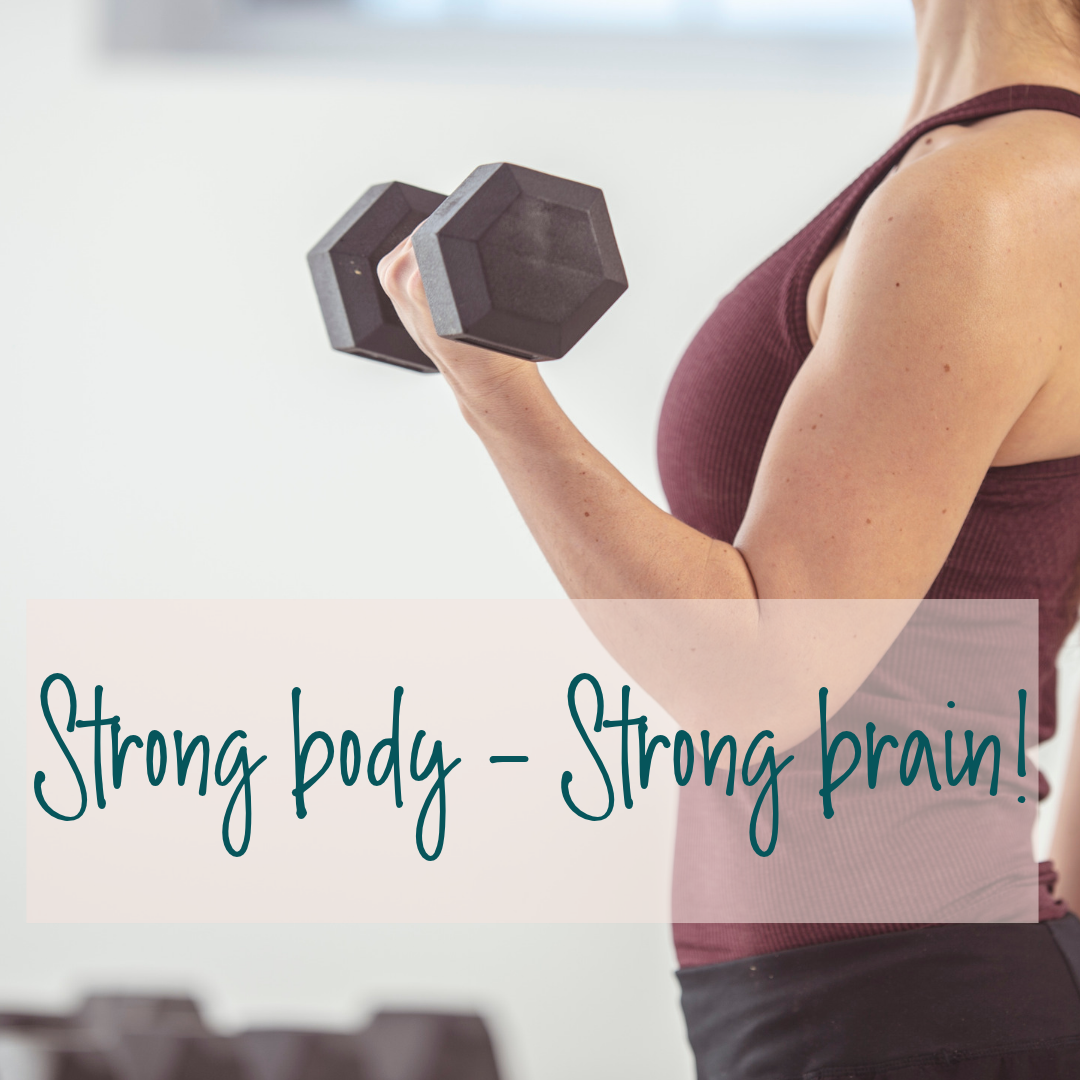
You might think strength training is just about stronger muscles and bones, but it has big benefits for the brain too. For women in midlife and beyond, every squat, step-up or overhead press helps balance, coordination, breathing and concentration as well as healthy ageing and cognitive wellbeing.
Healthy blood flow supports a healthy brain
Our brains brain use around 20% of the body’s oxygen and resting energy - all carried through the blood vessels. Running, cycling and swimming may be the kinds of exercise you think of for cardiovascular fitness, but strength training is also hugely effective.
When we lift weights, our muscles need more oxygen and nutrients – this makes our heart rate and blood flow rise and so our cardiovascular system works alongside the muscles.
With regular practice, strength training can support blood pressure, blood-vessel function and metabolic health. Because the health of the heart and blood vessels is closely connected with brain health, these benefits can extend well beyond stronger muscles and bones.
The brain thrives on variety and challenge
Strength training is not just physical, it’s also a form of learning. A bit like how learning a new language, a musical instrument or a new hobby needs a lot of concentration at first - and then gradually feels more natural with practice.
When we learn a new exercise, the brain is busy:
working out where the body is and how it needs to move
coordinating your muscles
helping you balance and maintain your posture
controlling the movement
adapting as you practice or try different variations
These skills are particularly valuable in midlife and later life. Strength training provides regular practice in balance, coordination, body awareness and movement control - all of which help with everyday activities and confident movement.
What is the brain doing during different exercises?
Changing stance, shifting in weight, balancing on one leg or pressing a weight overhead each gives the brain a slightly different problem to solve;
· Squats: The brain coordinates the hips, knees, ankles and core while helping with balance, posture and awareness of body position through the up & down movement.
· Lunges: With the feet in different positions and each leg doing a different job, the brain manages balance, coordination and body position in a new way.
· Single-leg deadlifts: Removing the support of one leg creates a greater balance challenge. The brain uses proprioception — awareness of where the body is in space — and makes constant small adjustments to maintain stability.
· Step-ups: The brain judges the height and position of the step, coordinates foot placement, shifts body weight onto one leg and maintains balance on the way up and down.
· Overhead presses: The brain coordinates the shoulders and arms while organising the core and other stabilising muscles to keep the body controlled as the weight moves overhead.
· Rows: The brain coordinates the arms, shoulders and back to pull the weight towards the body while keeping the torso stable and the movement controlled.
· Farmer’s carries: The brain manages the walking pattern while coordinating grip, posture and core stability, responding to small changes in balance with every step.
The movement changes, but the principle stays the same: muscles provide the effort while the brain coordinates how the work gets done.
The bigger picture matters too
Obviously brain health depends on more than just exercise, but regular exercise can influence chemicals linked with mood and wellbeing, help with stress management and support better sleep.
A varied, balanced diet provides energy and nutrients, while social connection, time outdoors and proper recovery also play a part. No single exercise, food or habit can protect the brain on its own; the most valuable approach combines movement, nutrition, sleep, stress management and staying engaged with life.
What about Alzheimer’s disease and dementia?
Alzheimer’s disease and other forms of dementia seem to be more and more prevalent at the moment…
While there’s no guarantees, physical activity is one of several modifiable lifestyle factors associated with dementia risk.
Exercise may support the brain by increasing blood flow, reducing inflammation and helping to maintain healthy brain cells. In turn, these effects may help protect memory and cognitive function.
Combining cardiovascular activity with strength training provides a broad range of potential benefits for brain health, mobility and day-to-day tasks.
Regular physical activity forms part of wider recommendations for supporting brain health with age. It can also offer important physical and functional benefits for people already living with dementia, when adapted to their abilities, health and circumstances.
· Keep moving in ways that feel enjoyable and sustainable.
· Build strength gradually.
· Support heart health.
· Choose movements that challenge balance and coordination.
· Keep learning and practising new skills.
You can find out more about exercise and Alzheimer’s here.
A final thought
We often decide if exercise is working if we see results - stronger muscles, losing weight, better balance or being able to jog for longer without getting as out of breath.
An important point to remember is that learning a new skill and physical challenge also gives the brain something to work on.
We can’t stop ageing, but regular movement can keep giving the body and brain reasons to stay active, capable and engaged - at whatever stage of life you are.